
🇩🇪DE:
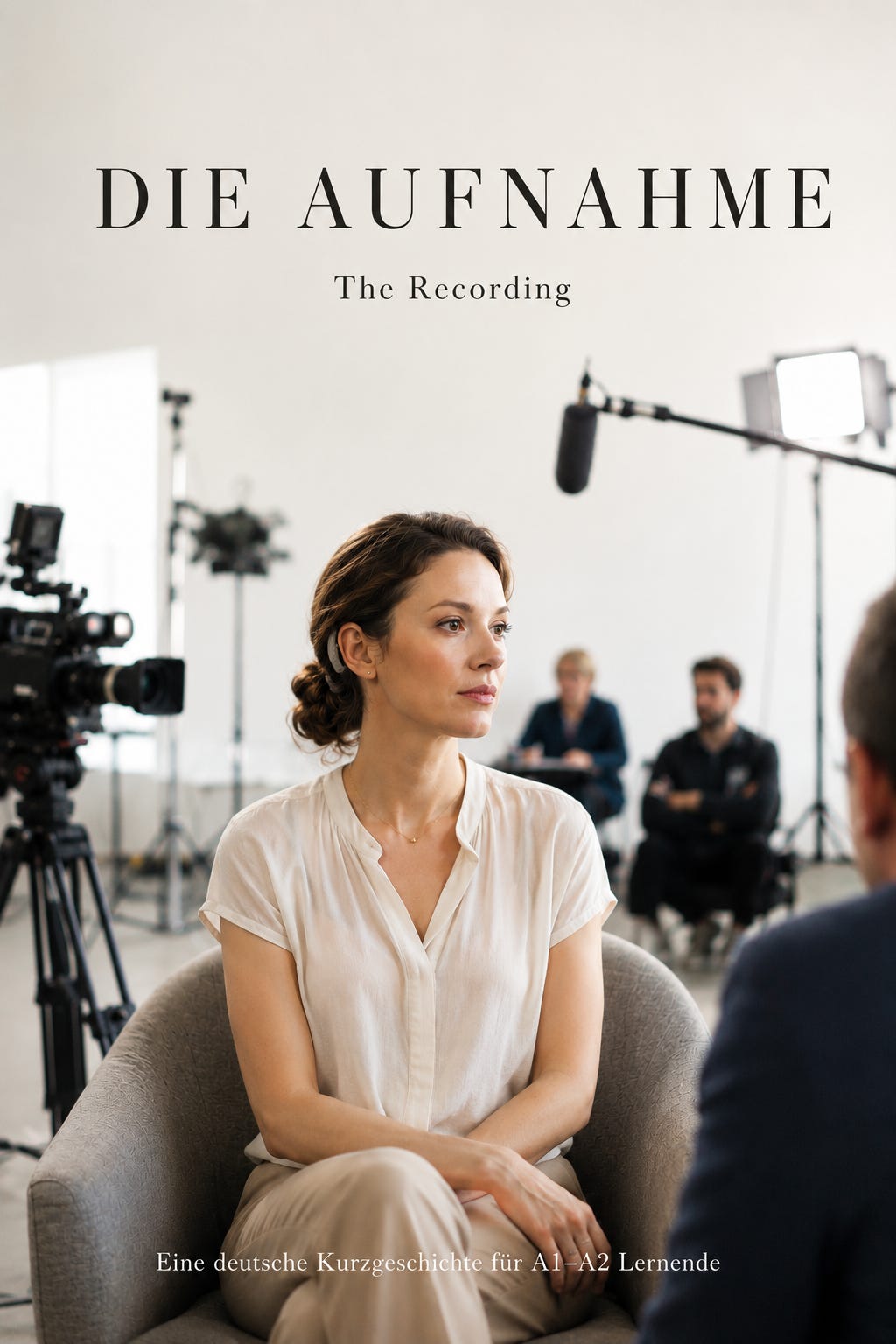
Mila wird gehörlos geboren. Für sie ist das normal. Ihre Welt ist still — aber sie ist nicht leer. Sie ist voll von Händen, von Gesichtern, von Bewegung. Die Familie spricht mit den Händen. Der Vater erzählt Geschichten mit den Händen. Das Lachen ist still, aber echt.
Dann sparen die Eltern viele Jahre. Sie lieben Mila. Sie wollen ihr helfen. Es gibt eine Operation. Ein kleines Gerät. Vielleicht wird das Leben leichter.
Und eines Tages hört Mila zum ersten Mal.
Aber was passiert mit einem Menschen, der eine neue Welt bekommt — und eine alte Welt verliert? Was bedeutet Heilung, wenn nichts kaputt war?
„Die Aufnahme” ist eine leise Geschichte über Identität, Familie und die Frage, wer entscheidet, was „normal” ist — mit einfacher Sprache für A1-A2-Lernende.
🇬🇧EN:
Mila is born deaf. For her, this is normal. Her world is silent — but it is not empty. It is full of hands, of faces, of movement. Her family speaks with their hands. Her father tells stories with his hands. The laughter is silent, but real.
Then her parents save for many years. They love Mila. They want to help her. There is an operation. A small device. Maybe life will be easier.
And one day, Mila hears for the first time.
But what happens to a person who gains a new world — and loses an old one? What does healing mean, when nothing was broken?
“The Recording” is a quiet story about identity, family, and the question of who decides what “normal” is — written in simple language for A1-A2 German learners.
🇪🇸ES:
Mila nace sorda. Para ella, eso es normal. Su mundo es silencioso — pero no está vacío. Está lleno de manos, de rostros, de movimiento. Su familia habla con las manos. Su padre cuenta historias con las manos. La risa es silenciosa, pero real.
Luego sus padres ahorran durante muchos años. Aman a Mila. Quieren ayudarla. Existe una operación. Un pequeño aparato. Quizás la vida sea más fácil.
Y un día, Mila oye por primera vez.
Pero ¿qué le pasa a una persona que gana un mundo nuevo — y pierde uno antiguo? ¿Qué significa curar, cuando nada estaba roto?
“La grabación” es una historia serena sobre la identidad, la familia y la pregunta de quién decide qué es “normal” — escrita en lenguaje sencillo para estudiantes de alemán de nivel A1-A2.
🇨🇳ZH:
米拉生来失聪。对她来说,这很正常。她的世界是寂静的——但并不空洞。那里充满了手,充满了面容,充满了动作。家人用手说话。父亲用手讲故事。笑声是无声的,却是真实的。
后来,父母存了很多年的钱。他们爱米拉。他们想帮助她。有一种手术。一个小小的装置。也许生活会变得容易一些。
有一天,米拉第一次听见了声音。
可是,一个人得到了一个新世界——却失去了一个旧世界,会怎么样呢?如果本来就没有什么坏掉,那”治愈”又意味着什么?
《录音》是一个安静的故事,关于身份、家庭,以及”究竟由谁来决定什么是正常”这个问题——以简单的语言写成,适合 A1-A2 级别的德语学习者。
🇸🇦AR:
وُلدت ميلا صمّاء. بالنسبة إليها، هذا أمرٌ طبيعي. عالمها صامت — لكنه ليس فارغاً. إنه مليء بالأيدي، بالوجوه، بالحركة. عائلتها تتكلّم بالأيدي. والدها يروي القصص بيديه. الضحك صامت، لكنه حقيقي.
ثمّ يدّخر والداها المال سنواتٍ طويلة. إنهما يحبّان ميلا. يريدان مساعدتها. هناك عملية جراحية. جهازٌ صغير. ربما تصبح الحياة أسهل.
وذات يوم، تسمع ميلا لأول مرة.
لكن ماذا يحدث لإنسانٍ يكسب عالماً جديداً — ويفقد عالماً قديماً؟ ما معنى الشفاء، إذا لم يكن شيءٌ مكسوراً من الأساس؟
«التسجيل» قصةٌ هادئة عن الهوية والعائلة، وعن السؤال: مَن الذي يقرّر ما هو «طبيعي»؟ — مكتوبة بلغة بسيطة لمتعلّمي الألمانية في المستوى A1-A2.
Here’s the thing about learning German from textbooks: you memorize der Tisch, die Lampe, das Fenster. You drill Akkusativ. You pass quizzes.
And then a real German moment hits you — and you have nothing.
Stories work differently. When you follow Natalie through that classroom, your brain doesn’t translate. It feels. And feeling is how language sticks.
Every week, subscribers get two full graded German books like this one. With it:
Vocabulary lists with clean English translations
Comprehension questions that build confidence, not anxiety
Speaking prompts for when you’re ready to find your own voice
Simple A1 language — short sentences, real emotion
Cultural and social context that helps you understand why Germans say what they say
No grammar tables. No pressure. Just a story you actually want to finish.
You’ll watch Natalie find her voice in a language she’s still learning. And maybe — quietly — you’ll start finding yours.
Subscribe free below. The book is waiting for you.
Some words hurt. Some words heal. Some words — finally — come out.
Let’s learn the ones that matter.
Get your free sample
Lösungen
Kapitel 1
Multiple Choice:
1 – A   |   2 – B   |   3 – A
Fragen zum Text:
1.	Mila wurde in einer kleinen Stadt geboren.
2.	Milas Familie spricht mit den Händen (Gebärdensprache).
3.	Lena ist Milas beste Freundin. Sie ist auch gehörlos.
4.	Der Vater erzählte am Abend Geschichten mit den Händen.
5.	Die Eltern träumten von einer Operation (Cochlea-Implantat) für Mila.
Kapitel 2
Multiple Choice:
1 – B   |   2 – B   |   3 – B
Fragen zum Text:
1.	Die Familie geht in ein großes Krankenhaus.
2.	Mila hört zum ersten Mal ein Geräusch. Es ist seltsam und laut.
3.	Die neuen Geräusche sind verwirrend und zu viel.
4.	Mila weint, weil sie die Stille und ihre alte Welt vermisst.
5.	Die Mutter setzt sich zu Mila, nimmt ihre Hand und sagt: „Ich liebe dich.“
Kapitel 3
Multiple Choice:
1 – B   |   2 – B   |   3 – A
Fragen zum Text:
1.	Mila ist Dolmetscherin.
2.	Mila hilft gehörlosen und hörenden Menschen.
3.	Der Reporter fragt: „Wie war es, zum ersten Mal zu hören?“
4.	Mila sagt, ihre Eltern haben aus Liebe gehandelt. Sie waren nicht falsch.
5.	Am Ende fühlt sich Mila zu Hause in zwei Welten. Sie ist glücklich.